Why Racecourses Are Built Around More Than the Track
Racecourse layout shapes how people watch, move and gather. Learn how to use the track map to choose viewing spots, plan routes and meet companions.
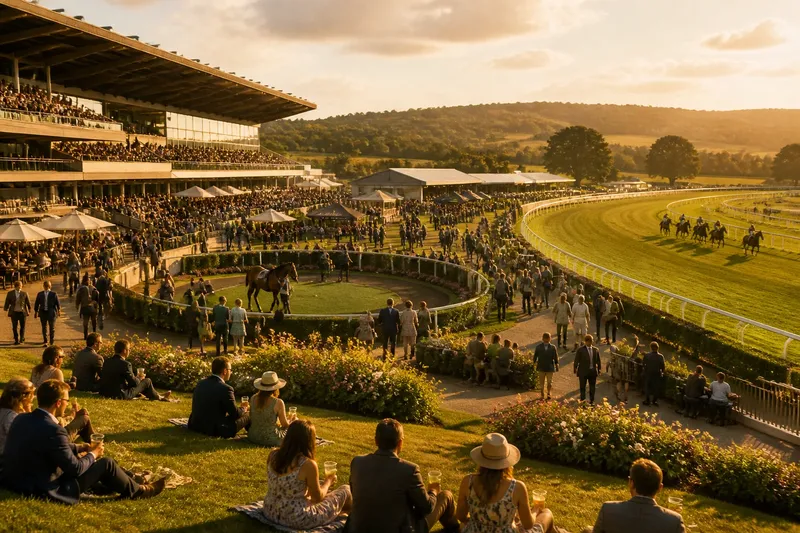
Why does a racecourse need grandstands, lawns, paddocks and walkways when the racing happens on the track? Racecourse layout shapes what people can see, how they move between moments, and where they gather while horses are away from view. The course is the centerpiece, but the rest of the grounds turn racing into an event that can be followed from different places and at different paces.
What a racecourse includes
A racecourse is a connected site, not simply an oval or straight strip of turf. Its arrangement may bring together the racing surface, stands, an enclosure near the horses, public lawns, entrances, food areas and routes between them. The specific mix differs from one venue to another, but each part serves a purpose in the day’s movement and viewing.
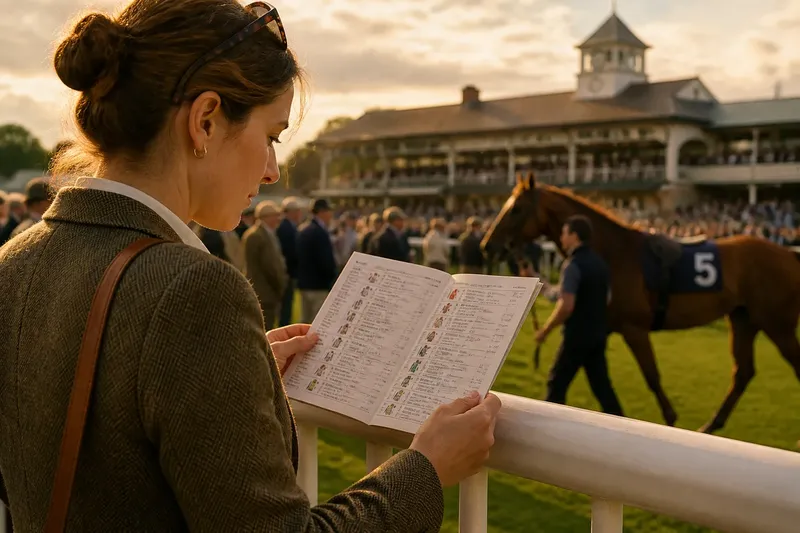
Some facilities serve particular users or functions. The parade ring lets spectators see horses before a race; the weighing room and stable areas serve racing operations and are not ordinary public gathering spaces. Public access varies, so a venue map is useful for understanding which routes and areas are open to visitors.
Think of the grounds as several linked settings: one for watching the race, one for seeing horses close up, and others for waiting, meeting companions or taking a break. A good layout makes those settings feel related without requiring every visitor to spend the whole day in one place.
How the track shapes viewing
The course’s shape and position determine where a spectator can see the field, how long it remains in view, and whether the finish is easy to follow. A venue may have a circuit, a straight course, or more than one configuration. Stands are placed to give people a useful view of key stretches, especially the run toward the finish.
A race is not equally visible from every point. Curves, changes in elevation, buildings and the distance across the grounds can hide parts of the action. On a broad circuit, spectators may see horses pass one section and then reappear later. At a straight-course venue, the field may move along one extended line, with the best vantage depending on the stand and finish location.
View also changes with the height and angle of a stand. Higher seating can help a visitor follow the field’s position around the course, while a place closer to track level may make the horses feel nearer. Neither view tells the whole story, so people often choose a spot according to whether they value the finish, the atmosphere or a closer look at the runners.
Before settling in, check the course map and identify where the finish is in relation to your entrance.
Why viewing areas differ
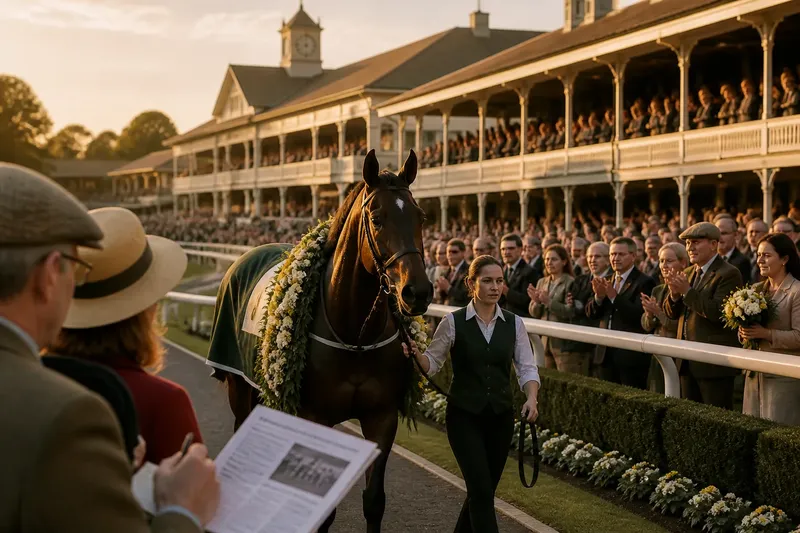
Different viewing areas let a racecourse serve visitors with different preferences and access arrangements. A grandstand may offer sheltered seats and a clear outlook; an enclosure may place spectators near the parade ring or other public facilities; open grounds can give people room to stand, sit or meet friends. These are not just different prices or labels. They create distinct ways to spend the day.
Separation also helps manage the flow of people. If everyone had to use one narrow route between the entrance, viewing area and paddock, movement would become uncomfortable at busy points. Multiple paths and gathering places give visitors options, while barriers and signs distinguish public areas from operational ones.
Say you arrive with a friend who wants to watch from a seat while you would rather see the horses before the race. If the map shows a public route between the stand and parade ring, you can agree on a meeting point and split up briefly without losing track of one another. The layout matters because it makes that choice possible; check venue access details before assuming a particular route is open.
Pauses between races
The intervals between races are part of the experience, and the grounds shape how those pauses feel. Visitors may walk to the parade ring, find refreshments, sit on a lawn, or stay in the stand and talk through what they have just watched. These spaces keep the event moving even when there is no field on the course.
Where the parade ring sits in relation to the stands affects how easily spectators can include it in their routine. A short, legible route makes it easier to move between watching the horses and returning to a view of the track. If the ring is tucked away or reached through a busy passage, a visitor may instead choose to remain near the stand.
Gathering areas also help groups coordinate. A prominent lawn, terrace or food court can serve as a simple landmark when companions want different things. The useful question is not only “Where can I see the race?” but “Where can we meet without blocking the next move?”
Choosing where to spend time
Start with the kind of visit you want, then use the venue map to match it to the grounds. If seeing the finish is your priority, locate the winning post and the public viewing areas with a clear outlook. If you want to see horses before racing, find the parade ring and note how it connects to the stands. For a relaxed day with companions, identify a meeting place away from the busiest route.
- Check the finish location: If the map shows a public viewing area facing the closing stretch, choose it when following the result is your priority; if not, select another listed viewpoint with a clearer outlook.
- Find the parade ring: If the map marks a public route to the ring and your admission permits access, plan to visit it; otherwise, choose a viewing area available to your ticket.
- Locate a meeting point: If the map names a visible landmark all companions can reach, agree to meet there; if access or visibility is uncertain, choose a different public landmark.
- Look for sheltered space: If the map identifies a covered public area, use it for a pause between races; if none is shown, plan to return to an available stand or another listed public space.
- Review access information: If your route and destination are listed as open to your admission, include them in your plan; if details are unclear, check the venue’s current visitor information before setting out.
- Compare the route lengths on the map: If the parade ring and your preferred viewing area connect by a straightforward public path, plan to visit both; if the route appears complicated or restricted, choose one main area and a nearby meeting point.
For a first visit, it can help to choose one main viewing spot and one nearby place to gather rather than trying to cover the entire site. That leaves room to follow the day without turning each interval into a race across the grounds.
How layout changes atmosphere
Architecture and open space influence whether a racecourse feels close-knit or expansive. A stand facing a compact circuit can make the crowd feel connected to the action. A large lawn creates a looser, social setting, while a long walk between public areas can make the grounds feel more like separate destinations.
The relationship between the course and its buildings also affects how attention shifts. A prominent view of the track keeps racing in sight; a courtyard or terrace may draw people into conversation while the horses are elsewhere. These settings do not compete with the race. They give visitors ways to engage with the meeting beyond the few minutes when a field is running.
When comparing venues, look beyond the course outline. Notice where people can gather, how public routes connect the main spaces, and whether the finish is visible from the places you expect to use. Understanding racecourse layout helps you choose a day that fits how you want to watch, move and spend time.
What to check before arrival?
Can you watch the finish from every stand?
No. Stand position, course shape and sightlines differ, and some sections of the race may be easier to see from one area than another. Check the venue map for the finish and public viewing points before choosing where to spend the race.
Is the parade ring inside the main viewing area?
It depends on the venue, and access arrangements can vary by ticket or enclosure. Look for the parade ring on the map and confirm that your admission includes access to the route and area you want to visit.
Where should a group agree to meet?
Choose a clear, fixed landmark such as a named entrance or a prominent public feature shown on the map. Avoid relying on a vague description like “near the stand,” since a large venue may have several entrances and gathering spaces.
Can you move freely between public areas?
Not always; some venues use separate enclosures, gates or one-way routes. Review the current visitor map and access information so your plan reflects the areas open to your admission.
Racecourse layout is easiest to read as a series of choices linked by paths: where to watch, where to see the horses, and where to pause with other people. A quick look at the map before arrival can show whether those places sit close together or call for a deliberate plan. For a useful racecourse layout plan, pick a viewpoint and meeting spot, then let the rest of the grounds shape the day as it unfolds.