Horse Bridle Parts and Their Roles in Racing
Learn horse bridle parts and their roles, from the headstall and bit to reins and optional gear, so you can describe racing tack without guessing at fit.
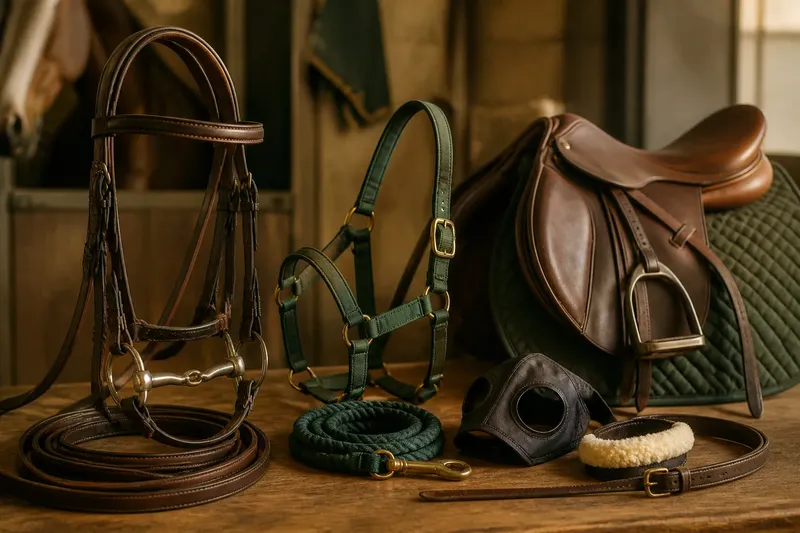
At the rail, a dark bridle can look like a tangle of straps and metal. Knowing the horse bridle parts helps you tell the headstall from the reins, spot a bit if one is present, and distinguish basic gear from optional additions.
Bridles in context
A bridle gives a rider a way to communicate with a horse through reins and, in many designs, a bit. Its form and materials have varied across eras and riding traditions; the familiar racing silhouette is not a timeless standard. Leather is common in racing tack, while synthetic materials also appear in equestrian equipment.
A bridle is not the same as a halter or saddle. A halter is generally used to handle a horse on the ground, often with a lead rope. A saddle supports the rider, while the bridle is associated with riding communication.
Imagine a museum educator placing a bridle, halter, and saddle side by side. Visitors first identify the saddle as the rider’s support, then the halter as ground-handling gear, and finally trace the bridle’s reins toward the headstall. The result is a clear description of each item’s role without treating the pieces as interchangeable.
Headstall and straps
The headstall is the network of straps that sits around the horse’s head and supports other parts of the bridle. Commonly named components include the crownpiece over the poll, cheekpieces along the sides of the face, and a browband across the forehead. Some designs also have a throatlatch beneath the throat area.
These straps organize and support the equipment; they are not the reins. On many bridles, cheekpieces connect the headstall to the bit. A browband crosses the forehead, and the crownpiece rests over the poll. Layouts vary, so a component’s absence or different shape may simply reflect another design.
To read an unfamiliar bridle, locate the straps that hold the arrangement first, then trace the reins and identify what they connect to.
Bit and rein connections
On a bridle with a bit, the bit rests in the horse’s mouth and connects to the headstall and reins. The reins extend toward the rider, forming a communication link. A bridle does not guide a horse by itself: communication also involves the rider’s hands, the horse’s training, and other riding aids.
Bit designs differ. A snaffle bridle is commonly associated with a single-bit arrangement; a double bridle carries two bits and separate reins. Names can be confusing when a setup is viewed out of context, so describe the visible equipment before assuming how it is used. Racing bridles do not all have the same bit or rein arrangement.
In the museum display, the educator asks visitors to trace the reins from the rider’s end toward the horse. They see the connection between reins, bit, and headstall, and can describe the arrangement without guessing how it should be fitted or handled.
Optional racing equipment
A noseband encircles the muzzle area and may be part of a bridle design. A flash strap is a narrow additional strap associated with certain noseband arrangements. Neither appears on every bridle, and appearance alone does not explain why a particular horse wears one.
Blinkers, also called blinders in some contexts, limit sideward vision. A shadow roll sits across the nose and is used in some racing contexts to affect what a horse sees near the ground. These specialized pieces are distinct from the headstall, bit, and reins.
Say the educator places a blinker hood beside a plain bridle rather than attaching it to the display. Visitors can then describe it as an added visibility aid, not as a strap required on every bridle.
Bridle questions?
What is the difference between a bridle and a halter?
A bridle is associated with riding and connects reins to the horse through a bit or another headgear arrangement. A halter is generally used for ground handling, often with a lead rope rather than riding reins.
Does every racing bridle have a bit?
No. Bridle arrangements vary, and terminology differs among riding traditions. Describe the equipment you can see rather than assuming every bridle includes a mouthpiece.
What do cheekpieces do?
Cheekpieces are straps running along the sides of the face that connect parts of the headstall and, on many bridles, support the bit. Their location distinguishes them from the crownpiece over the poll and the browband across the forehead.
Why might a bridle have blinkers?
Blinkers limit sideward vision and are used in some racing settings. Their presence alone does not reveal a horse’s temperament, training, or intended performance.
Reading a bridle
When looking at racing tack, name the headstall and its straps, trace the reins, identify a bit if present, and separate optional additions from the basic arrangement. That method helps a spectator describe what is visible without guessing at the horse’s needs.
Horse bridle parts are easier to understand when you keep their roles distinct: the headstall organizes the equipment, reins carry communication, and optional pieces serve narrower purposes. For questions about fitting, handling, or a horse’s comfort, consult a qualified equine professional rather than drawing conclusions from appearance alone.