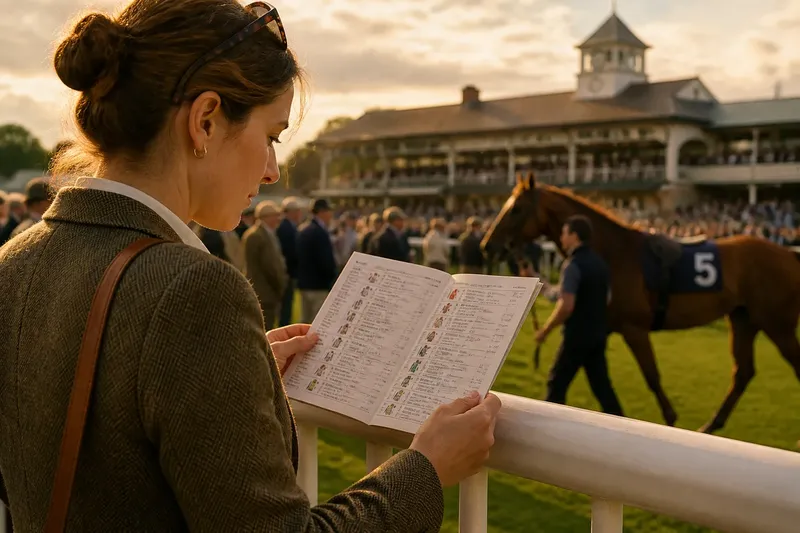
A First Race Meeting: How to Read the Programme
Learn how to read a race programme, follow the meeting schedule, identify runners and check late changes so you can stay oriented through race day.
How do you follow a race meeting without trying to learn every racing term at once? Use the programme as a running guide: check the day’s schedule first, then read each race when it is approaching, and revisit the entries for changes. This simple rhythm keeps a first race meeting easier to follow.
Start with the schedule
Before the first race, find the meeting’s timetable. The programme usually lists each race in order, with a scheduled start time and a title or brief description. Treat those times as a guide to the day’s sequence, not as a promise that every event will begin at the exact minute shown.
Scan the full list once and note the race numbers you may want to watch. You do not need to study every entry in advance. The point is to understand how the meeting is laid out and when to turn your attention to the next race.
- Find the first race: mark its scheduled time so you know when the card begins.
- Check the order: note how many races appear before the one you want to follow.
- Spot breaks: look for longer gaps in the schedule, which can be a good time to get refreshments or check the next page.
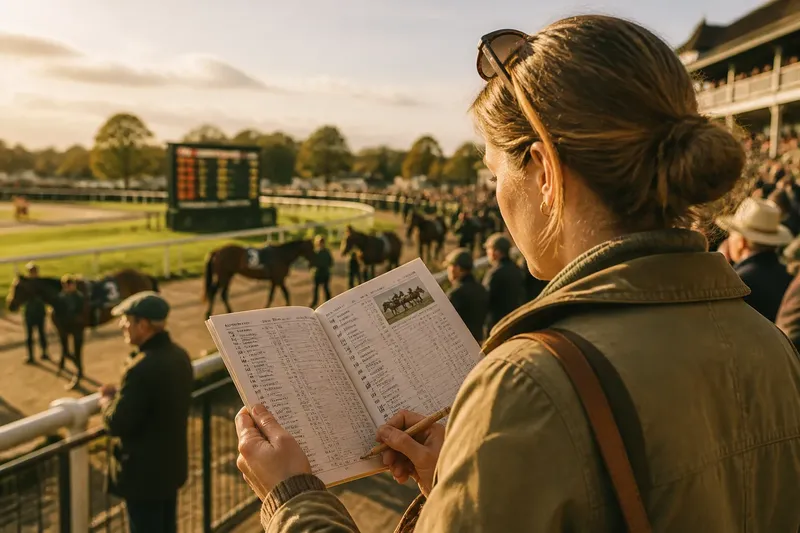
- Keep the programme handy: leave it open at the current race, using a finger or a small paper marker to hold your place.
At the course, announcements and display boards may provide updates alongside the printed schedule. If the timetable changes, follow the latest information provided by the venue and adjust your plan.
Read one race at a time
As a race approaches, turn to its page or section. Start with the race number and scheduled time, then confirm that the heading matches the event listed on the day’s timetable. This prevents a common first-meeting mix-up: reading a runner’s details from the next race while waiting for the current one.
The entries usually appear as a numbered list of horses. Each line may include a horse’s name, the rider’s name and other race-specific details. Layouts differ, so use the printed column headings rather than guessing what an abbreviation means. If a term is unfamiliar, ask a staff member or consult the programme’s own explanation.
For following the action, the horse’s name and number are the quickest reference points. A number can help you match a runner on the page to one shown on a display or announced aloud. Check that both belong to the same race before drawing a conclusion.
Say you are following the third race and a horse’s number catches your eye. You find that number in the third-race list, note the horse’s name beside it, and watch for an announcement before the start. If the entry is later marked as withdrawn, you can cross it off and focus on the remaining listed runners.
Track changes during the day
A printed programme captures entries at the time it was prepared. A horse may be withdrawn, or another detail may change before the race. Venues can communicate updates through announcements, boards, or a printed notice; the programme may also contain space for handwritten changes.
Before each race, make a brief check:
- Match the race number on the page to the race approaching.
- Look for a withdrawal notice or an updated entry display.
- Listen for announcements that identify a change by horse number or name.
- Mark the change beside the relevant entry so you do not keep looking for a runner who is no longer participating.
- Check the current information again if you step away and return close to the start.
If an announcement is hard to hear, check the venue’s display or ask a nearby staff member rather than relying on a guess. Keep the original entry visible, but distinguish it clearly from later information. A pencil is useful because you can add a note without obscuring the printed details.
Programme questions?
What should I look at first?
Start with the meeting schedule, then turn to the race that is coming up. Within that race, use its number and time to confirm you are reading the correct entry list.
What does a horse’s number tell me?
It identifies the runner within that race and helps connect the printed entry with venue displays or announcements. Numbers start afresh in each race, so check the race heading as well.
How can I tell if an entry has changed?
Look for a venue update, a withdrawal notice, or an announcement naming the horse or its number. If two sources appear to conflict, ask staff which information is current.
Do I need to understand every abbreviation?
No. Begin with the schedule, race number, horse name, and runner number; those details are enough to follow the programme’s basic structure. Use its glossary or ask for help when an unfamiliar term affects the detail you want to understand.
Keep a steady rhythm
Between races, close the current page and locate the next race in the schedule. When there is time, read its heading and scan the entries. As the start approaches, return to the change check instead of trying to memorize the whole card.
That rhythm leaves room to watch the horses and listen to the course rather than keeping your head down over the programme. It also gives you a clear place to resume after a conversation or a short break.
For a first race meeting, reading the programme is less about mastering every detail than keeping the right race in view. Follow the schedule, match each entry to its race, and check for updates before the start; those habits make the day easier to track from the first page to the last.